


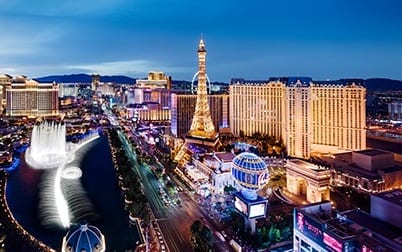

- Las Vegas tourism is experiencing a measurable slowdown in 2025
- International visitors from Europe and Asia are declining despite strong air connectivity
- High resort pricing and fees are damaging the city’s value perception
- Trump-era immigration and visa rhetoric is hurting U.S. travel sentiment abroad
- Casino operators like MGM face growing criticism over their pricing strategy
For decades, Las Vegas has been one of America’s most resilient tourism powerhouses. But new visitor data now paints a sobering picture: Las Vegas tourism is cooling, and the reasons go far beyond seasonal fluctuation.
Recent figures show year-over-year declines in visitor arrivals, hotel occupancy, and casino foot traffic, particularly along the Strip. While Las Vegas is far from collapse, the slowdown is forcing the city—and its largest casino operators—to confront a convergence of economic, political, and perception-driven challenges.
A Global Destination Feeling Global Headwinds
Las Vegas is not just a U.S. leisure destination. It is directly connected by air to Europe and Asia, attracting high-spending visitors from markets such as the United Kingdom, Germany, France, Japan, South Korea, and Southeast Asia. These travelers traditionally stay longer, spend more, and fuel premium gaming, luxury retail, and conventions.
But that advantage is weakening.
International travel sentiment toward the United States has cooled again amid renewed immigration crackdowns, stricter visa scrutiny, and aggressive enforcement rhetoric linked to President Donald Trump’s return to office. While Las Vegas itself remains open and welcoming, global travelers increasingly factor border anxiety, political tension, and perceived hostility into their destination choices.
For international tourists, Las Vegas is discretionary. Competing cities such as Dubai, Tokyo, Singapore, Bangkok, and Barcelona are offering easier entry, clearer messaging, and increasingly better value.
When the Price Tag Becomes the Message
At the same time, pricing on the Strip has become a lightning rod.
Resort fees, parking charges, expensive food and beverage offerings, and reduced complimentary benefits are reshaping how visitors perceive Las Vegas. An often-cited example—$11 for a cup of coffee at major Strip resorts—has become symbolic of a broader backlash.
Casino giants such as MGM Resorts International defend premium pricing as necessary to offset labor, energy, and operating costs. Critics argue the industry has crossed a psychological threshold: Las Vegas no longer feels like value-driven fun, but rather like a destination extracting maximum spend at every turn.

Repeat visitors are shortening stays, visiting less often, or shifting to downtown, off-Strip properties—or skipping Las Vegas entirely.
Casino Floors Feel the Change
The impact is visible on casino floors and in earnings reports. While gaming revenue has not collapsed, high-end table play and international-driven segments have softened, particularly those reliant on long-haul travelers.
Social media and local reporting increasingly describe quieter casinos, less crowded entertainment venues, and subdued nightlife—a sharp contrast to the post-pandemic surge of earlier years.
Convention attendance and airline traffic into Harry Reid International Airport have also lagged expectations, raising concerns about future demand pipelines.
Industry Response: Adjustment or Denial?
Major operators including MGM, Caesars, and Wynn are responding with targeted promotions, loyalty incentives, and expanded entertainment offerings. There is also renewed emphasis on conventions, sports events, and non-gaming revenue streams.
Yet critics say these measures avoid the core issue: Las Vegas was built on accessibility and excitement. When the destination feels expensive, politically tense, or unwelcoming—especially to international guests—demand erodes quickly.
Younger travelers, in particular, are less loyal to casino culture and more inclined to compare Las Vegas not to its past glory, but to global alternatives offering culture, nightlife, safety, and affordability.
A Warning Signal for U.S. Tourism
Las Vegas’s slowdown may be an early warning for U.S. tourism more broadly. As a bellwether destination, what happens on the Strip often reflects national sentiment toward travel, spending, and brand perception.
The combination of:
- High consumer prices
- Trump-era policy uncertainty
- Weaker international confidence in U.S. travel
- And rising global competition
is reshaping how travelers evaluate America as a destination.
Las Vegas is not finished—but it is at a crossroads. The city’s next chapter may depend less on spectacle and scale, and more on whether it can restore trust, affordability, and a sense of welcome in an increasingly competitive global tourism marketplace.