




Hakuba village, one of Japan’s most popular ski destinations, will introduce fines for disruptive behaviour starting 1 July 2026, as local authorities move to curb growing tensions between residents and a surge of international visitors.
The village, located in north-western Nagano prefecture, has revised its long-standing “Village Manners” ordinance to include enforceable penalties. Under the new rules, offenders who ignore official warnings could face fines of up to ¥50,000 (about £237).
Previously, Hakuba prohibited disruptive conduct but lacked the authority to impose penalties. The updated ordinance identifies eight specific violations, including graffiti, placing stickers on public or private property, shouting or playing loud music after 10 p.m., launching fireworks at night, and smoking while walking in public areas.
Village officials said the changes are designed to protect Hakuba’s landscape and residents’ quality of life as tourism reaches unprecedented levels.
Hakuba has become a global hotspot for skiers and snowboarders seeking deep powder snow, attracting visitors from Europe, North America, and Australia. In 2024, the village recorded 2.71 million visitors, a dramatic increase from roughly 330,000 in 2023, marking one of the most extreme tourism rebounds in Japan.
Hakuba in Context: Niseko, Kyoto, and Europe
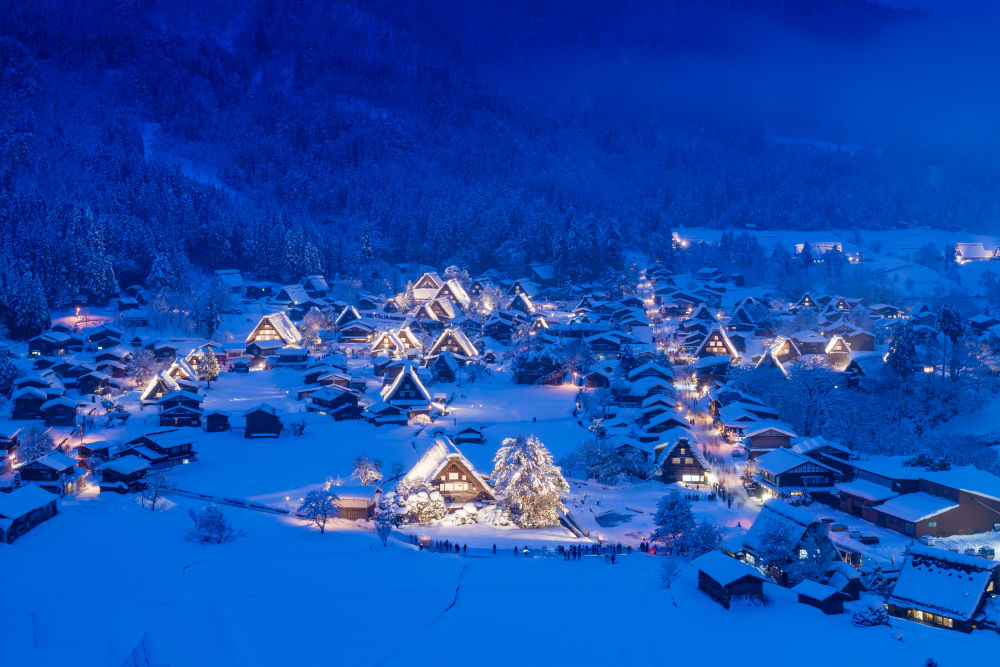
Hakuba’s response reflects a growing national trend but highlights its unique position as both a ski resort and a living village. Niseko, Japan’s most internationally developed ski destination, has long struggled with similar pressures, including nightlife noise, short-term rentals, and housing affordability. However, controls there have focused more on zoning and development regulation than direct behavioural enforcement.
Historic cities such as Kyoto and Kamakura have taken a stricter approach to visitor conduct, introducing fines and access restrictions to protect residential neighbourhoods and cultural sites. Hakuba’s measures fall between these models, targeting behaviour while maintaining open access.
Comparable challenges have been faced for years in European Alpine resorts such as Zermatt, Chamonix, St. Anton, and Cortina d’Ampezzo, where authorities have increasingly relied on enforcement to manage tourism impacts.
Policy Angle: What Japan Could Learn from Europe
European destinations offer several policy tools that Japanese municipalities may increasingly consider as overtourism intensifies.
In Zermatt, Switzerland, where visitors vastly outnumber residents during peak seasons, local authorities have emphasised firm enforcement. “Tourism only works when the local population continues to accept it,” the municipality has said in explaining its approach to noise controls, overnight stays, and public order rules.
In Chamonix-Mont-Blanc, French officials have defended tighter regulation of short-term rentals and party tourism, warning that “uncontrolled tourism threatens both housing for residents and the mountain environment itself.”
Austria’s Tyrol region, home to resorts such as St. Anton, has stressed behaviour management as a core policy pillar. “Quality tourism depends not only on numbers, but on respect—for residents, nature, and local rules,” regional tourism authorities have said in support of curfews, alcohol controls, and event limits.
Across the Alps, municipalities commonly use tourist taxes earmarked for infrastructure, policing, and environmental protection, along with multilingual enforcement teams that combine education with immediate penalties.
Japan-Wide Outlook: What May Come Next
Hakuba’s move is increasingly seen as part of a broader national shift in how Japan manages tourism growth. While responsibility for enforcement remains largely at the municipal level, policymakers in Tokyo are under growing pressure to provide clearer national frameworks for overtourism management.
Experts and local governments have suggested that Japan could move toward standardised behavioural guidelines, stronger legal backing for local fines, and expanded use of tourism taxes or accommodation levies dedicated to crowd management, public transport, and resident services.
There is also growing discussion around visitor dispersion policies, encouraging travel beyond overcrowded hotspots, and the possible introduction of capacity controls at particularly sensitive cultural or natural sites. Some prefectures are already experimenting with digital visitor tracking, reservation systems, and time-slot access for popular attractions.
Japan has historically relied on voluntary compliance, social norms, and hospitality culture. However, as visitor numbers continue to exceed pre-pandemic levels, Hakuba’s decision suggests the country may be entering a new phase of tourism governance—one that blends traditional courtesy with clear rules, enforcement, and accountability.
Hakuba Mayor Toshiro Maruyama said the aim is coexistence rather than deterrence. “I’d like to help create a place where both residents and visitors can spend their time comfortably,” he said following a village assembly meeting.
Hakuba now joins around 20 Japanese municipalities, including Kyoto, Kamakura, and Fukuoka, that have introduced enforceable behaviour rules in response to rising visitor numbers.
Public concern has intensified following several high-profile incidents involving foreign visitors, including graffiti damage at Tokyo’s Meiji Jingu Shrine, inappropriate behaviour at Shinto sites, and the mistreatment of deer in Nara.
As Japan prepares for continued record tourism growth, Hakuba’s new fines may signal a national recalibration, balancing the economic benefits of tourism with cultural protection, resident wellbeing, and long-term sustainability.