


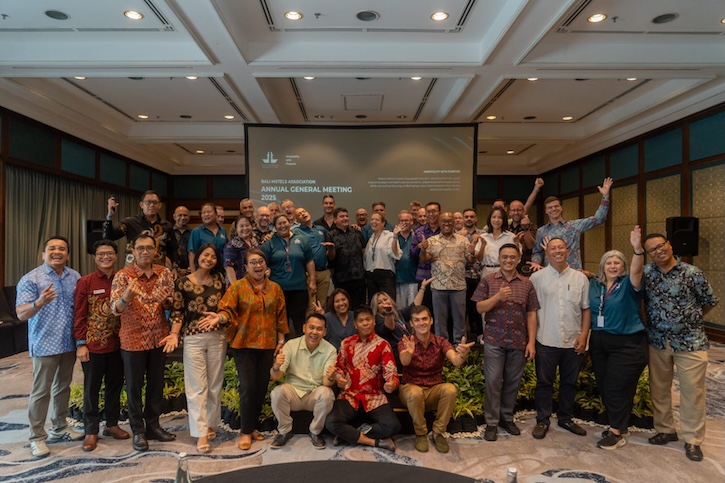

When the Bali Hotels Association (BHA) convened its Annual General Meeting (AGM) at The Westin Resort Nusa Dua, Bali, the agenda extended far beyond leadership elections and a celebrated cooking competition. The gathering offered a clear snapshot of how one of Asia’s most influential hotel associations is navigating success, scrutiny, and responsibility in one of the world’s most visited destinations.
A Powerful Industry Institution
Founded in 1969, the Bali Hotels Association is among Southeast Asia’s oldest hotel organizations. Today, it represents 171 star-rated hotels and resorts, encompassing global luxury brands, regional chains, and independent Balinese properties. Collectively, these members account for a significant share of Bali’s accommodation capacity, tourism employment, and economic contribution.
BHA’s influence lies in its ability to act as a unified voice for the hotel sector, bridging the often-competing interests of government authorities, international investors, local communities, and the global travel market. For decades, it has been a key interlocutor on issues ranging from hotel licensing and taxation to labor policy, zoning, safety standards, and crisis response.

Leadership Continuity in a Time of Change
At the AGM, member general managers elected Fransiska Handoko, General Manager of Wyndham Tamansari Jivva Resort Bali, as Chair for 2026, continuing her leadership role first assumed in 2022 when she became BHA’s first female chairperson. Simona Chimenti, General Manager of The Pavilions Bali, was reconfirmed as Vice Chair.
Under Fransiska’s leadership, BHA has placed strong emphasis on sustainability, regulatory alignment, and constructive government relations, positioning hotels as partners rather than obstacles in Bali’s tourism governance.
“In 2026, we will strengthen our commitment to sustainable hospitality, empower local talent, and accelerate initiatives that help our industry adapt to changing global expectations,” Fransiska said. “Together with our members, we will continue elevating Bali as a leader in responsible and culturally rooted tourism.”
Outgoing Chair Franklyn Kocek, General Manager of Four Points by Sheraton Bali, Seminyak, reflected on the privilege of serving the association during a period marked by recovery, reform, and renewed global attention on Bali.
What BHA Actually Does
While often perceived externally as a lobbying body, BHA’s work is operational and hands-on:
- Policy & Advocacy: Acting as the hospitality sector’s primary interface with provincial and national authorities, especially during periods of regulatory change.
- Crisis Coordination: From volcanic disruptions to pandemics and climate-related events, BHA has played a central role in information-sharing, safety protocols, and recovery planning.
- Sustainability Leadership: Long before sustainability became a global tourism mandate, BHA promoted waste reduction, water stewardship, energy efficiency, and community engagement.
- Talent Development: Through training initiatives and platforms such as the annual cooking competition, BHA invests in local human capital and professional pride.
These efforts are anchored in the association’s guiding principle, “Hospitality with Purpose,” emphasizing tourism that is culturally respectful, environmentally responsible, and economically inclusive.
Reputation: Credible, Pragmatic, and Under Pressure
Internationally, BHA is widely regarded as a credible and solutions-driven organization, respected by global hotel brands and tourism stakeholders alike. Its institutional memory and long-standing government relationships give it rare continuity in a sector often shaped by political cycles.
Yet BHA also operates under growing pressure. Bali’s popularity has intensified debates around overtourism, environmental degradation, water scarcity, waste management, and social impact. Hotels—despite many sustainability initiatives—are often perceived by the public as part of the problem, forcing BHA into a delicate balancing act between advocacy and accountability.
Strengths and Structural Challenges
Strengths
- Unified industry representation in a fragmented tourism landscape
- Deep-rooted relationships with policymakers
- Strong implementation focus, particularly on sustainability and safety
- Global credibility through internationally recognized member brands
Challenges
- Balancing economic growth with environmental limits
- Aligning the diverse priorities of luxury, mid-scale, and independent hotels
- Navigating shifting regulations and public sentiment
- Demonstrating measurable sustainability outcomes amid rising demand
Sustainability in Action
The AGM coincided with the 2025 BHA Cooking Competition, themed “Zero-Waste, Full Flavor,” which challenged chefs to create Nusantara-inspired dishes using 100% local ingredients and zero-waste techniques. Alongside it, the BHA Sustainability Showcase connected hotels with responsible local producers, reinforcing the association’s emphasis on local sourcing.
During the event, BHA launched the BHA Sustainability Vendor Directory, a new industry resource linking hotels with verified sustainable suppliers and service providers.
“Our sustainability efforts are strongest when we collaborate with the communities around us,” said Ankit Airon, BHA Board Member and Head of Sustainability.
The Reality Ahead
As destinations worldwide reassess tourism models, BHA finds itself at a pivotal juncture. Its role is no longer just to represent hotels, but to help shape Bali’s long-term tourism equilibrium—one that preserves culture, protects the environment, and sustains economic opportunity.
With renewed leadership and an expanding sustainability framework, the Bali Hotels Association enters 2026 as both a power broker and a steward, navigating the realities of success in one of the world’s most admired—and most challenged—tourism destinations.
While the Bali Hotels Association (BHA) operates as an independent, Bali-based industry organization, its mission and initiatives increasingly align with global tourism and sustainability networks addressing responsible travel, environmental protection, and community resilience.
BHA’s common ground with the Ocean Alliance (OACM) and World Tourism Network (WTN)
BHA shares common ground with organizations such as the Ocean Alliance Conservation Member (OACM) and the World Tourism Network (WTN) through a mutual emphasis on sustainable tourism practices, environmental stewardship, and private-sector leadership. Initiatives such as BHA’s sustainability showcase, zero-waste culinary programs, and newly launched Sustainability Vendor Directory reflect principles also championed by OACM’s marine and coastal conservation frameworks and WTN’s global advocacy for responsible, SME-inclusive tourism development.
While no formal institutional affiliation currently exists between BHA, OACM, and WTN, industry observers note a growing convergence in goals—particularly around local community engagement, climate responsibility, and practical implementation over policy rhetoric. This informal alignment places BHA within a broader global movement where hotel associations are no longer passive stakeholders, but active partners in shaping tourism’s environmental and social footprint.