


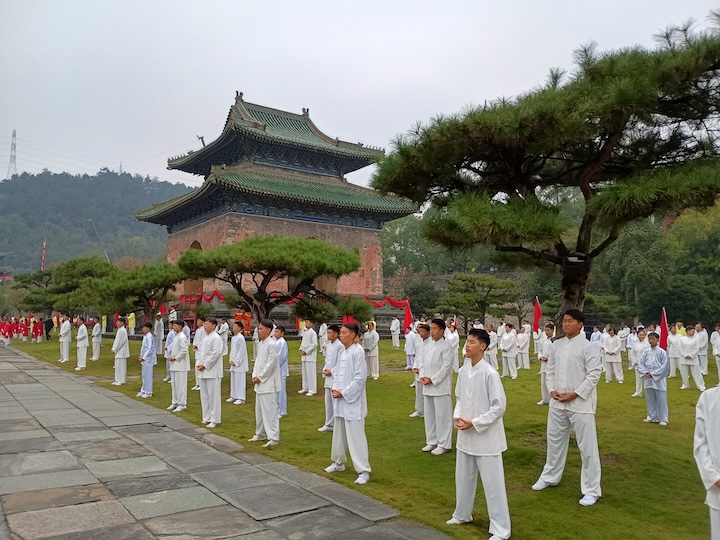

Tai Chi is not about learning how to fight—it is about learning how to live in balance.
While destinations such as the Shaolin Temple or Shangri-La are firmly established on China’s tourism map, a lesser-known but equally significant mountain is beginning to attract international attention. Wudang Mountain (Wudang Shan), located in central China’s Hubei Province, is increasingly being recognized as a destination for cultural, spiritual, and experiential travel.
A UNESCO World Cultural Heritage Site, Wudang Mountain is regarded as the birthplace of Chinese Tai Chi and one of the most important centers of Taoist philosophy. For centuries, it has shaped Chinese spirituality, martial arts, architecture, and traditional culture.
International Visit During Tai Chi Culture Festival

In October 2025, an international group of tourism and cultural representatives visited Wudang Mountain following an invitation from the Chinese Ministry of Culture and Tourism and local authorities in Hubei Province. The visit coincided with the International Wudang Tai Chi Culture Festival 2025, an event that brought together Tai Chi practitioners, scholars, and tourism professionals from around the world.
The small German delegation was led by Linda Tang, Owner and CEO of FITT Fujian International Travel Tang. Among the participants was Alexander Haase, a tourism professional with Die Eisenbahn Erlebnisreise who joined the journey as part of the industry delegation.
Traveling from Frankfurt to Beijing with Air China, the group benefited from shorter flight times offered by Chinese carriers due to unrestricted access to Russian airspace. After a brief domestic flight of less than two hours, the delegation arrived in Shiyan, the main gateway city to Wudang Mountain.
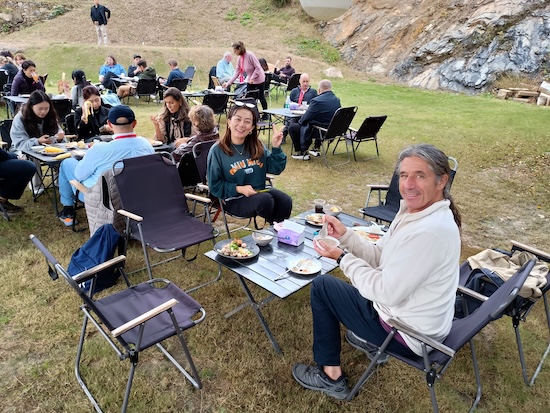
Local organizers hosted approximately 30 international guests, coordinating accommodation, transportation, cultural activities, and site visits with a level of organization that highlighted Hubei’s growing readiness for international tourism.
A Mountain of Temples and Taoist Heritage
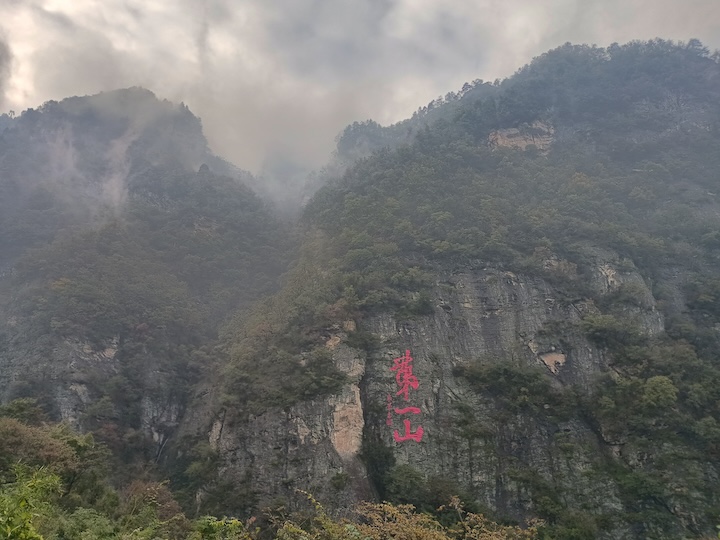
Rising to around 1,660 meters, Wudang Mountain is renowned for its dramatic natural scenery and its extensive complex of Taoist temples, monasteries, and palaces. Visitors typically ascend by cable car to the first plateau before continuing on foot via steep stone stairways to the summit and the iconic Golden Palace (Taihe Gong).
Often shrouded in mist, the mountain’s temples emerge and disappear from view, creating an atmosphere frequently described as mystical and timeless—an experience that has made Wudang one of China’s most spiritually resonant landscapes.
Changing Perceptions of China
For many participants, the journey marked their first visit to China. Conversations during the trip reflected surprise at the country’s cleanliness, order, and calm, particularly in smaller cities and rural areas of Hubei.
Adrian Axisa, President of the Malta Martial Arts Association and a long-time Tai Chi practitioner, described Tai Chi as “more than movement — it is a path to balance, humility, and self-discovery,” noting that visiting Wudang Mountain provided deeper insight into the philosophical roots of the practice.
Participants with previous experience in China also observed noticeable changes. Compared to the early 2000s, urban life has become quieter and more structured, public transport more orderly, and overall living conditions more comfortable. China continues to be regarded as a safe destination for international travelers, with medical services that now meet or exceed Western standards in many regions.
Hubei: A Province Still Under the Radar
Despite its cultural and natural assets, Hubei Province remains largely absent from classic China itineraries, which typically focus on Beijing, Shanghai, Xi’an, and Chengdu. Covering nearly 186,000 square kilometers and home to approximately 60 million people, the province offers a wealth of landscapes and heritage sites that are still relatively unknown to international visitors.
This may change soon. A new high-speed rail connection between Xi’an and Shiyan, scheduled to open in the second half of 2026, will reduce travel time to under two hours, significantly improving access to Wudang Mountain.

Growing Interest in Spiritual and Slow Travel
With increasing demand in Western markets for wellness, mindfulness, and slow travel experiences, tourism experts see strong potential for Wudang Mountain. Visitors can practice Tai Chi, study Chinese calligraphy, and explore Taoist philosophy in an environment deeply connected to nature and the concept of balance between Yin and Yang.
Travel professionals suggest that future itineraries could integrate Wudang Mountain into broader China journeys, combining major cities with lesser-known regions that offer cultural depth and reflective experiences.
A potential two-week itinerary could include Beijing, Xi’an, Wudang Mountain, Chengdu, Chongqing, a Yangtze River cruise, Shanghai, and Hong Kong, blending history, modern urban life, natural scenery, and spiritual heritage.
As China continues to diversify its tourism offerings, Wudang Mountain may soon move beyond its status as a hidden gem—emerging as a key destination for travelers seeking both cultural insight and inner balance.
What Is Wudang Tai Chi?
Wudang Tai Chi is one of China’s most influential internal martial arts, originating on Wudang Mountain in Hubei Province. Unlike external fighting styles that rely on muscular strength and speed, Wudang Tai Chi emphasizes internal energy, balance, and harmony between body and mind.
Rooted in Taoist philosophy, Wudang Tai Chi integrates martial technique, meditation, breathing, and traditional Chinese concepts of health. Today, it is practiced worldwide both as a martial art and as a method of wellness and mindfulness.
The Taoist Origins of Wudang Tai Chi
The origins of Wudang Tai Chi are traditionally attributed to Zhang Sanfeng, a legendary Taoist monk believed to have lived during the Song or early Ming Dynasty. According to legend, Zhang developed Tai Chi after observing nature—most famously a confrontation between a crane and a snake—realizing that softness, flexibility, and yielding could overcome brute force.
While historical details remain debated, Wudang Mountain has long been recognized as a spiritual center of Taoism, where monks refined internal martial practices over centuries. These teachings blended martial defense with Taoist ideals of longevity, inner cultivation, and harmony with nature.
Internal Martial Arts: Strength from Within
Wudang Tai Chi belongs to the family of internal martial arts (Neijia), alongside styles such as Xingyi Quan and Bagua Zhang. These systems focus on cultivating Qi—the vital life energy that flows through the body according to traditional Chinese philosophy.
Key characteristics of Wudang Tai Chi include:
- Slow, continuous, circular movements
- Coordinated breathing and posture
- Mental focus and calm awareness
- Relaxation instead of tension
The goal is not only physical skill, but the unification of mind, body, and breath.
Yin and Yang in Motion
At the core of Wudang Tai Chi lies the Taoist principle of Yin and Yang—opposing but complementary forces that shape the universe. Every movement in Tai Chi embodies this balance: empty and full, rising and sinking, stillness and motion.
Rather than resisting force directly, practitioners learn to absorb, redirect, and neutralize energy. This philosophy applies beyond martial practice, offering a way to approach life with adaptability, patience, and resilience.
Wudang Mountain: A Living Tradition
Unlike Tai Chi practiced solely for exercise in urban parks, Wudang Tai Chi remains deeply connected to its spiritual birthplace. On Wudang Mountain, Taoist monks and dedicated practitioners continue to train within ancient temples and courtyards, preserving lineages passed down through generations.
Visitors to Wudang Mountain can witness early-morning practice sessions, often performed in silence and mist, against a backdrop of historic palaces and forested peaks. For many, learning Tai Chi in this setting transforms the art into a profound cultural and spiritual experience.
Health Benefits and Global Popularity
Today, Tai Chi is practiced by millions of people worldwide and is increasingly recommended by medical professionals. Research and clinical experience link Tai Chi practice to:
- Improved balance and coordination
- Reduced stress and anxiety
- Increased flexibility and joint health
- Better posture and breathing
- Enhanced mental focus
Wudang Tai Chi, with its emphasis on internal cultivation, appeals especially to those seeking authenticity and deeper philosophical meaning behind the movements.
Why Wudang Tai Chi Matters Today
As global interest in mindfulness, wellness, and slow travel continues to rise, Wudang Tai Chi offers more than physical exercise. It represents a holistic system for living—one that values balance over excess, awareness over aggression, and harmony with nature over domination.
For travelers, practitioners, and seekers alike, Wudang Tai Chi is not just a martial art. It is a bridge between ancient wisdom and modern life, still practiced where it was born—on the sacred slopes of Wudang Mountain.