


Becoming an ED patient
I live in Manhattan and had been using the same primary care doctor for decades. I always assumed that if I ever was in need of emergency care, he would be there to throw me a life preserver. Over the telephone or Telemed I would explain my symptoms. Having my records at his fingertips he could review my medical history and provide immediate assistance, recommendations, access to drugs, admit me to a hospital when necessary, and – in general – get me back on the road to feeling good.
Sadly, my assumptions, based on many television ER medical series, were an outdated understanding of how emergency medicine is practiced in New York, and a seriously flawed estimate of how sick I was, placed me in a level of medical hell I had never imagined, heard of, experienced, or anticipated.
One moment I was contemplating a new hair color and style, and the next minute I am rushing back and forth to the toilet with uncontrollable diarrhea, to be followed, weeks later, by overwhelming constipation, all leading to multiple admissions to hospital EDs (New York’s Mount Sinai and NYU’s Langone).
Path to sick
How did this weird illness happen? Where did it come from? One GI doctor thinks that it happened as a result of Moderna Vaccine #2. Other health care professionals think it was sparked by drinking 45 ounces of Volumen, prescribed for patients on their way to an MRE test. Whatever the cause, no one has offered a sold scientific or medical theory to solving the problem except by throwing Imodium at it.
As my medical issues turned into a crisis, I tried to reach my primary care physician on the telephone. When I was able to get through the voice prompts, I landed at the office of a telephone message service, speaking to an arrogant woman who informed me that my doctor was not available. If this call was truly an emergency, I could leave a message and the on-call doctor would circle back. With no other options, I left my information and then waited and waited and waited. When I had just about run out of patience and seeing my toilet paper supply depleted, I finally heard the phone ring. I picked up the telephone and got to speak to a doctor. My primary was unavailable, but she would try to help. I explained the symptoms, reviewed my medical history, and was told to go to the ER room of a hospital or Urgent Care. She repeated my choices and wished me luck. There was no way she was going to offer an opinion, a diagnosis, a remedy, or offer an office visit. I could head to an emergency room, critical care facility, or deal with the problem – she was off the case.
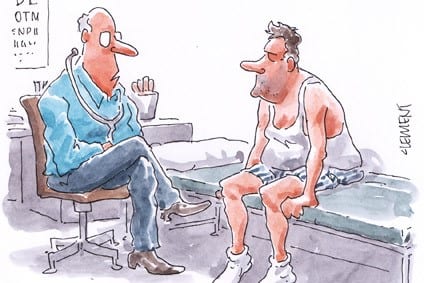
In Manhattan, if you have a medical emergency, you do not get to link to your primary physician. You are not directed to rush to their office or to meet them at the nearest hospital where they will guide you through intake procedures, process you into an empty hospital bed, or, in many cases, even visit with you after you have been admitted. There is one way to get into a hospital bed, and the only route is through the Emergency Department.
Unfortunately, in 2021, the ED is not for the exclusive use for people with emergencies. This space is frequently the first point of contact for many patients with minor ailments who use the same space and services as those patients with true emergencies. To be politically correct, each person expects and deserves treatment with some degree of immediacy; however, the mix of emergency and non-emergency situations complicates the process and wreaks havoc on available procedures and limited resources.
EDs: Not created equal
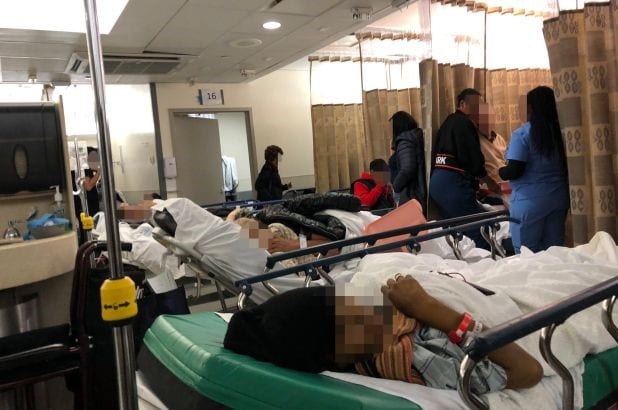
Ebony Bowden NY Post, December 9, 2019