



“I feel blessed to be able to grow this unique nut.”
The Vallee de Mai reserve on Praslin has always been preached about as the Garden of Eden or the lost paradise, with its uniqueness for being the home of the famous coco-de-mer, the black parrot, and of its pristine lush vegetation.
But Vallee de Mai is not the sole jewel of Praslin; on the main road one can clearly see the Zimbabwe hill, lying perfectly, displaying its array of greenery which remains untouched and well-preserved. The Zimbabwe area of Praslin is also the secret haven of a well-hidden gem on the island.
Driving up the isolated hill for several minutes, one could surely sense nature’s invitation to a moment of tranquility and meditation, or to simply admire the beauty of this unexplainably beautiful piece of this steep mountain side. An ideal place to be for those wishing for an unhurried lifestyle.
One’s first encounter with this unique piece of nature was last week during one of the visits to tourism establishments on Praslin by Tourism and Culture Minister Alain St.Ange.
Stopping at an entrance marked Maison du Soleil, the groups was met by a tall simple-looking man who on first impression appeared reserved, but friendly. Jean-Louis Dugasse owns this 10,000 square meters of land, and he led the group on an amazing adventure on his land. Maison du Soleil is a self-catering establishment of two bungalows.
Mr. Dugasse is a man whose story is worth writing about.
The man behind this 10,000-square-meter wonderland is 54 years young and looks energetic; one can definitely sense that he is a hardworking man.
“My father was a planter. I never took up planting when I was young. I was more interested in the technical fields, and so my first step into the world of work was as a plumber,” he said.
Mr. Dugasse led us on a trip down memory lane and about how this beauty at Zimbabwe Praslin became a reality.
“I worked for the Public Utilities Corporation (PUC) for 17 years. Construction was also a field of interest for me after my years at PUC.”
And then, his destiny led him into buying this beautiful piece of land on the hill. Little did he knew back then that this would turn into one of the most beautiful properties on the island.
For him the work does not stop there. More can be done he thinks as he shared his future plans for his property with us.
“I am doing it not only for my children, but I am also leaving this asset for my grandchildren. I am happy with what I have achieved, with how I have been able to transform this green steep place into a garden which enthralls many,” he said.
“I feel blessed to be able to grow this unique nut; it is a task that not just anyone can do so. It requires great devotion, patience, and love for planting. I am happy when I see that people appreciate the value of our coco-de-mer.
“My aim is to join in the conservation of our coco-de-mer for our future generations to see what we have been blessed with,” he added.
Located on the top of Zimbabwe hill, the gardens of Maison du Soleil offers the peace and quiet one needs after a stressful week, or a getaway weekend from busy lives, or just a tranquil moment of reflection. This place is the ideal location for such ventures.
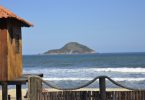
Giving an overview of the place, Mr. Dugasse clearly stated that most visitors to his place prefer the bungalow located at the top of his property. His clients are right in their choices. A breathtaking view presents itself as catamarans and other leisure boats glide on the azure ocean in the vicinity of Praslin and Curieuse, and the waves lap on the shores of Aride and Denis islands – a picture perfect view.
Looking down on his property, one can see that the little “vallee” is not only the home of the coco-de-mer plants but of a variety of fruit trees such as breadfruit, orange, guava, star fruit, and passion fruit, among so many others. He also plants other palms and a range of beautiful flowers which liven up the garden.
Nested perfectly on top of the Zimbabwe hill in a serene environment, far from the main communities, the garden provides an amazing lifetime experience.
Only minutes there, guests will vow to come back to this one-of-a-kind garden, but I bet readers are wondering what makes this garden unique.
The answer is simple… the many coco-de-mer trees on his land.
It all started almost two decades ago when he bought the land. On his land there was one coco-de-mer tree. He was never taught how to grow coco-de-mer nor do pollination of the plant, but he learned on his own and now he is an expert in doing it.
Across the years, he has observed, tried, and tested before knowing how to do it right. Pollinating a coco-de-mer plant is not everybody’s cup of tea. There are steps to take and one has to be careful to follow them carefully.
“When the third leaf comes out, which happens every year, you have to remove the nut and then the plant keeps growing. You get the nut and you sell it,” he said.
“But as any other living thing, it needs good nutrition and needs to be nurtured to grow well. The coco-de-mer plant needs water, fertilizers, and other nutrients.”
For the pollination of the plant, he removes the yellow flower on the male part of the coco-de-mer and puts it on the female part.
But, doing this, one needs to know the right time and technique to pollinate the plants.
It is all an intricate balance and dance in the life of the coco-de-mer and the patient gardener that tends to it.
Seychelles is a founding member of the International Coalition of Tourism Partners (ICTP) .