


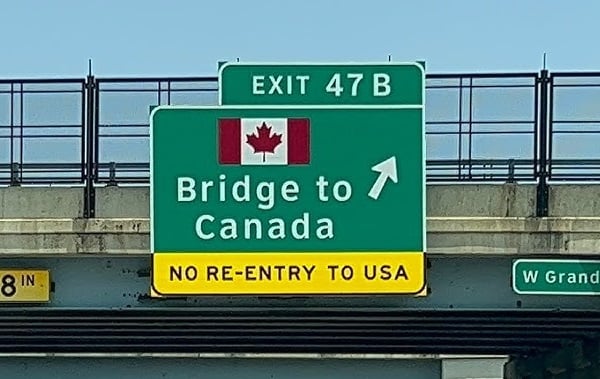

The World Tourism Network (WTN) has applauded the formation of the Beyond Borders Tourism Coalition (BBTC), calling it a timely and necessary industry-led response to a rapidly deteriorating U.S.–Canada travel environment—and urging that the initiative be expanded beyond North America, starting with Europe and other U.S. Visa Waiver Program countries.
WTN said the coalition represents more than a policy discussion. It is a warning signal from the tourism industry that one of the world’s most important and historically stable travel corridors is under strain, with consequences already visible in lost bookings, reduced airlift, and struggling border communities.
From Best Friends to “Elbows Up” at the Border
For generations, Canadians and Americans crossed the world’s longest peaceful border as naturally as neighbors visiting each other for the weekend. The biggest disputes were usually about hockey, baseball, or who really invented basketball.
In 2025, that familiarity has fractured.
The Beyond Borders Tourism Coalition was born as tourism leaders on both sides of the border watched a once-reliable relationship unravel under the weight of surprise fees, tariff talk, political rhetoric, and policy unpredictability—all landing squarely on an industry built on trust and long lead times.
Canadian road trips to the United States are down nearly 20 percent, with some U.S. states reporting that campground reservations from Canadians have plunged by more than 70 percent. In border and gateway states such as Montana and New Hampshire, Canadian visitors historically accounted for up to 80 percent of international tourism. Today, businesses are counting empty parking spaces, reduced flights, and shortened seasons.
Even U.S. ski resorts are no longer just watching snowfall forecasts—but hoping for a change in sentiment that brings Canadian skiers back to their slopes.
At the same time, U.S. tourism operators report that long-standing cross-border itineraries are unraveling as travelers decide that unexpected surcharges, tariffs, and tense headlines are not part of a relaxing vacation. Border towns that once measured success in sold-out weekends are now relying on discounted shoulder seasons to survive.
Nothing has symbolized the shift more starkly than new per-person surcharges for foreign visitors at iconic U.S. national parks, layered on top of existing entrance fees. International visitors will soon pay more than three times the cost of an annual park pass. At the same time, U.S. residents continue to pay the old rate—creating a two-tier pricing system that tourism leaders say damages goodwill and trust.
For tour operators who sold 2026 trips 12 to 18 months ago, these changes arrive mid-contract, leaving them to absorb the cost or pass it on—neither of which is sustainable.
The economic impact is already measurable. Group travel by motorcoach generated nearly $70 billion in direct traveler spending and supported more than 890,000 U.S. jobs in 2024, yet international group bookings are now reported to be down 30 percent—a blow felt most acutely in rural gateway communities.
Layered on top of fees and tariffs is a steady drumbeat of rhetoric—from “pay your fair share” messaging to casual annexation chatter—that may play well in soundbites but lands hard in communities whose livelihoods depend on welcoming visitors.
Canadians, who once made more than 20 million trips a year to the United States, are increasingly voting with their passports—staying home or traveling elsewhere. Meanwhile, U.S. travelers are quietly asking how welcome they are north of the border, even as Canadian destinations work to reassure them.
Indigenous and rural communities on both sides—many of which invested decades in building cross-border tourism relationships—now watch carefully laid plans wobble with every new fee, tariff, or political soundbite.
Tourism groups also warn of a growing “chilling effect” as travelers worry that border crossings may involve scrutiny far beyond passports—hardly the welcome mat expected for leisure travel.
A United Industry Response
The Beyond Borders Tourism Coalition was formed because tourism leaders concluded that this decline could no longer be addressed in isolation.
The coalition unites major associations representing tour operators, motorcoach and group travel, adventure and inbound tourism, student and youth travel, Indigenous tourism organizations, and destination marketing bodies in both countries. Collectively, they represent thousands of businesses and hundreds of thousands of workers whose livelihoods depend on predictable, welcoming cross-border travel.
Their shared question is simple and urgent:
How did the world’s longest peaceful border become one of the least predictable tourism experiences?
The coalition’s recommendations include ending the era of surprise fees, reassessing travel-related tariffs, dialing down hostile rhetoric, and reinvesting in the U.S.–Canada tourism relationship as a strategic economic asset, not a political talking point.
“Every $100 surprise at a park gate, every new tariff, every off-the-cuff negative comment about our closest neighbour sends a signal,” said Shannon Stowell, President of the Adventure Travel Trade Association and an initial founder of the BBTC.
“Right now, that signal is: ‘Maybe don’t come.’ Our ask is simple: stop making it harder and more expensive for Canadians and Americans to visit each other—and start acting like this relationship is still worth protecting, together.”
WTN: Take This Model Global
The World Tourism Network said the issues confronting U.S.–Canada travel are increasingly mirrored elsewhere and urged expanding the Beyond Borders model, starting with the European Union, the United Kingdom, and other U.S. Visa Waiver Program countries such as Japan, South Korea, Australia, and New Zealand.
WTN also encouraged major global associations—including WTTC, ETOA, and Destinations International—to become active participants, noting that their engagement would significantly amplify the coalition’s policy impact and credibility.
According to WTN, a multilateral Beyond Borders framework could help stabilize tourism flows, protect SMEs and rural communities, support aviation connectivity, and reinforce tourism’s role as a tool of economic resilience and people-to-people diplomacy.
As global travel becomes increasingly sensitive to political signals, WTN said initiatives that keep borders predictable, welcoming, and economically rational will determine which destinations thrive—and which quietly fall behind.