



- Road construction threatens Stonehenge’s World Heritage status.
- Underground corridor project was approved in November of last year.
- The corridor will be almost 3 kilometers long.
Stonehenge may lose its status as a World Heritage Site due to the construction of a tunnel under the landmark, according to recent reports.
The United Nations Educational, Scientific and Cultural Organization (UNESCO) has warned the British authorities that due to the construction of the underground highway, Stonehenge will receive the status of an object that is under threat. And this will be followed by exclusion from the list of cultural heritage.
The underground corridor project was approved by the British Ministry of Transport in November of last year. It is designed to ease the traffic load of the A303 motorway. The corridor will be almost 3 kilometers long.
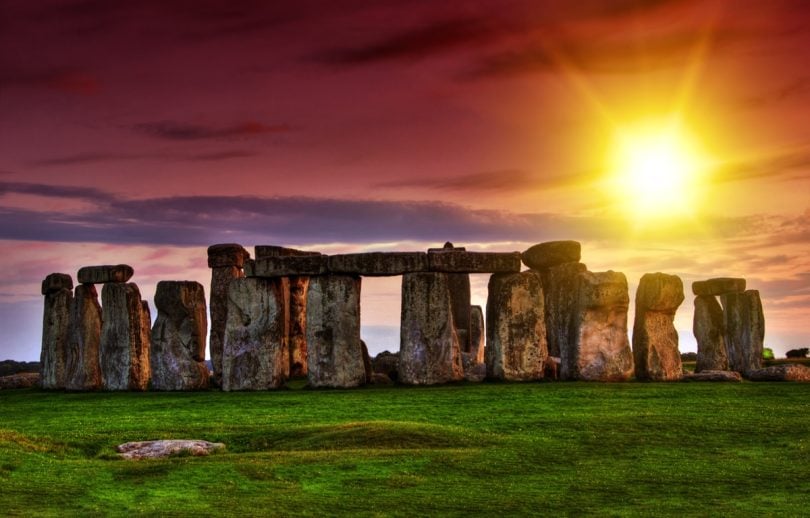
Stonehenge is a prehistoric monument on Salisbury Plain in Wiltshire, England, two miles west of Amesbury. It consists of an outer ring of vertical sarsen standing stones, each around 13 feet high, seven feet wide, and weighing around 25 tons, topped by connecting horizontal lintel stones.
Inside is a ring of smaller bluestones. Inside these are free-standing trilithons, two bulkier vertical Sarsens joined by one lintel. The whole monument, now ruinous, is orientated towards the sunrise on the summer solstice. The stones are set within earthworks in the middle of the most dense complex of Neolithic and Bronze Age monuments in England, including several hundred tumuli (burial mounds).
Archaeologists believe it was constructed from 3000 BC to 2000 BC. The surrounding circular earth bank and ditch, which constitute the earliest phase of the monument, have been dated to about 3100 BC. Radiocarbon dating suggests that the first bluestones were raised between 2400 and 2200 BC, although they may have been at the site as early as 3000 BC.
One of the most famous landmarks in the United Kingdom, Stonehenge is regarded as a British cultural icon. It has been a legally protected Scheduled Ancient Monument since 1882, when legislation to protect historic monuments was first successfully introduced in Britain. The site and its surroundings were added to UNESCO’s list of World Heritage Sites in 1986. Stonehenge is owned by the Crown and managed by English Heritage; the surrounding land is owned by the National Trust.