



Tourism is often described as an industry of smiles, discovery, and human connection. In Iran, it is also an industry of endurance.
Behind Iran’s ancient ruins, poetic cities, mountain villages, and desert caravans lies a tourism sector shaped—more than most—by geopolitics. Sanctions, visa restrictions, international perception, disrupted air connectivity, and payment barriers have repeatedly halted inbound tourism from Europe and North America. Each political shift can undo years of progress overnight.
When tourism to Iran stops, it does not stop abstractly. It stops in family kitchens, small offices, guide cooperatives, craft workshops, and local communities that depend entirely on visitors for income.
And at the center of this fragile ecosystem of Iranian tourism stand women.
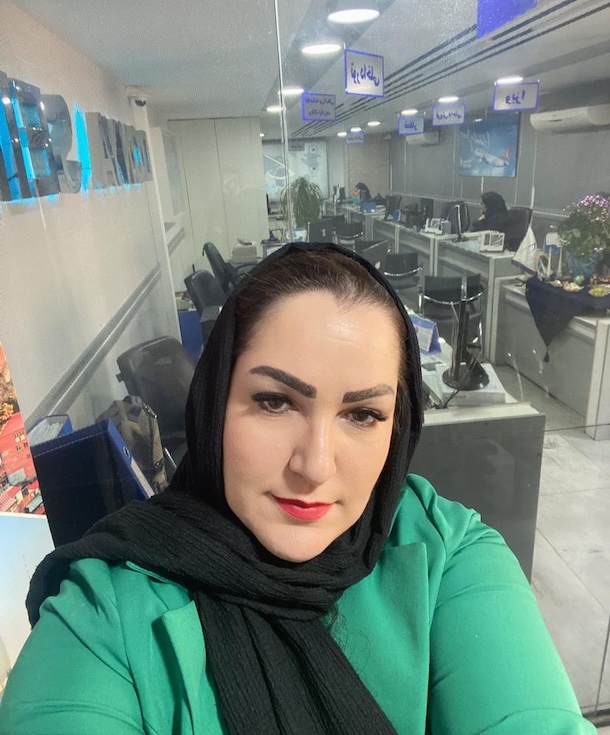
One of those women is Shahrzad Moayeri, International Communication Manager of the Association of Air Transport and Travel Agencies of Iran (AATTAI) and a respected voice in global tourism dialogue. Known internationally for her persistence and ability to “make the impossible possible,” Moayeri represents a generation of Iranian women who hold together an industry operating under extraordinary pressure.

AATTAI’s recent membership in the World Tourism Network (WTN) has created new spaces for exchange, idea-sharing, and South-South cooperation—proof that even when traditional markets close, dialogue and innovation continue.
Tourism in Iran: Immense Potential, Political Dependency
Iran is one of the world’s most under-visited tourism powerhouses.
Its assets are indisputable:
- One of the oldest civilizations on Earth
- UNESCO World Heritage Sites across multiple regions
- Diverse landscapes—from snowy mountains to deserts, forests, and seas
- A young, educated population with deep cultural pride
Yet tourism in Iran is uniquely dependent on politics. Unlike many destinations where tourism policy is shaped primarily by market forces, Iran’s inbound tourism fluctuates with international relations. Security perception—not lived reality—often determines demand.
This volatility means tourism professionals must constantly reinvent their work. Long-term planning is rare. Stability is fragile. Resilience becomes a daily skill.
A Woman’s Voice from Inside Iran’s Tourism Industry
(Reflections from Within on Resilience, Inequality, and the Weight of an Unpredictable Sector)
“I have worked in Iran’s tourism industry for many years—an industry that from the outside may appear colorful, dynamic, and full of the joy of travel. Yet behind the brochures, behind the ancient monuments, and behind the smiles of guests lies a world of constant instability—a world that we women, in particular, know all too well.
Working in tourism in Iran means living in a sector that is always the first to be hit and the last to recover.
Global tensions, regional conflicts, changes in visa regulations, sanctions, economic instability—any one of these can bring months of planning to a halt overnight. Again and again, we are forced to rebuild, often without infrastructure, without support, or without the stability that tourism in many other parts of the world takes for granted.
But being a woman in this industry adds another layer to these challenges.
I often find myself in meetings where I must prove my competence twice over. If I speak assertively, I may be labeled ‘too aggressive’; if I speak calmly, I may be overlooked.
And yet, women carry a significant share of this industry’s burden.
We run agencies, manage operations, accompany travelers, navigate bureaucracy, negotiate partnerships, and hold teams together through the most difficult crises. Many women are the unseen pillars of Iran’s tourism sector—creating experiences with determination far greater than the resources available to them.
Tourism in Iran exists within a contradiction:
A country rich in history, culture, landscapes, and hospitality—yet a sector constantly constrained by political perceptions and international complexities.
- Every year, we must reinvent the wheel.
- Every year, economic fluctuations rewrite the market.
- Every year, a global event reshapes the path forward.
Yet we continue.
Not because it is easy, but because tourism remains one of the few spaces where human connection can still cross borders.”
Iran Hospitality as a National Identity
If there is one truth that nearly every visitor to Iran agrees on, it is this: Iranian hospitality is exceptional.
Despite economic hardship and uncertainty, foreign guests are welcomed with warmth, curiosity, and generosity. Invitations for tea, shared meals, spontaneous help, and genuine smiles are not marketing tools—they are cultural instincts.
Hospitality in Iran is not transactional; it is personal.
For many travelers, this human warmth becomes the most powerful counter-narrative to political headlines.
Iranian Food: A Quiet Global Ambassador
Among Iran’s most effective international ambassadors is its cuisine.
Persian food—rooted in centuries of tradition—builds bridges where diplomacy often fails. Saffron-infused rice, slow-cooked stews, fresh herbs, bread from neighborhood ovens, and shared tables create moments of trust and connection.
- Food transcends sanctions.
- Food carries memory.
- Food opens conversations.
For many first-time visitors, Iranian cuisine serves as a gateway to understanding the country beyond politics.
Women, Resilience, and the Future of Tourism
“For women like me,” Moayeri says, “tourism is not just a profession; it is a form of resilience.”
Across Iran, women in tourism are preparing quietly for the future:
- Leading small and medium-sized agencies
- Building digital platforms and new market strategies
- Preserving heritage and community-based tourism
- Training the next generation of guides and professionals
They work in systems not designed for them, in markets without stability, yet remain committed to keeping tourism alive—because when borders reopen, the foundation must already exist.

A World Tourism Network Perspective
WTN was created to amplify precisely these voices—SMEs, women, and professionals working in difficult environments often overlooked by global tourism narratives.
With more than 32,000 members in 133 countries, WTN has become an international player in the global travel and tourism industry. Still, unfortunately, it is overlooked by the industry’s giant custodians, UN-Tourism and the World Travel and Tourism Council.
- Iran’s tourism story is not about absence; it is about pause.
- Not about failure, but about endurance.
When the political climate allows, tourism will return. When it does, it will be women—already holding the line—who will lead the recovery.
Final Message on Tourism Resilience in Iran
“Behind every successful journey to Iran,” Moayeri concludes,
“there is a woman who has worked twice as hard as anyone imagines. She is not merely selling a tour; she is holding together an industry standing on fragile scaffolding.
For her, resilience is not a choice—it is a necessity.”