


Hallway medicine: Boarding
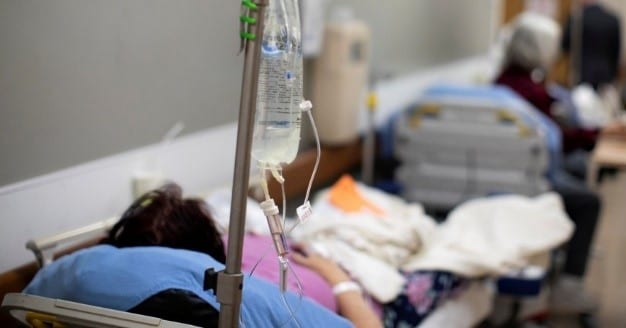
A commonly cited cause of ED inefficiency is “boarding” (aka Admit Holds) which occurs when a patient has been admitted to the hospital but is waiting for an inpatient bed to become available for transfer. In the meantime, the patient occupies an ED bed that is needed by a patient still in the waiting room. Because of hospital inefficiencies, patients are “boarded” in hallways or unlicensed care areas to make room for new patients in the waiting room that require to be seen and evaluated. “Hallway medicine” is substandard medical care but has become a reality of life in America’s EDs.
Some research suggests that the biggest culprit is too few beds, along with shortages of doctors, nurses, and medical equipment needed to care for each admitted hospital patient. This bottleneck at the gateway of American hospitals has led to as many as two-thirds of all emergency room patients, sick enough to be hospitalized, sitting in waiting rooms, “boarding” on stretchers in ED bays, or dozing in chairs in the hallways until a bed becomes available. With patients crammed into every available space, ER nurses and other healthcare providers quickly become overwhelmed, leading to fatal medical errors and significant delays that affect the outcome of patients who have suffered heart attacks, strokes, or infections.
Waiting and waiting
A driver of growing and high wait time is how many patients show up for treatment. Many are referred to the ED department by outside physicians. These referrals could occur because physicians are not sure if they can provide complete care, or because their schedule is too tight to see patients quickly. One study found that about half of nonemergent patients contacted another physician first and 70 percent of them were told to go the emergency room.
Adding to the ED load is the reality that outside physicians often lack admitting privileges to hospitals. When a patient needs to be admitted as an inpatient, but the provider cannot admit them directly, they send the patient to the ED for admission. A report from the American College of Emergency Physicians suggests that 70 percent of hospital admissions come through emergency rooms and it is increasing.
Success is an illusion
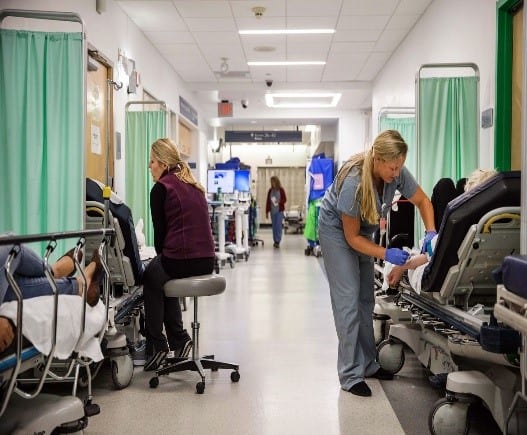
A successful ED depends on the amount of time patients spend from entry to leaving the facility (LOS – Length Of Stay). LOS also affects patient behavior. Poor wait times encourage Leaving Without Being Seen (LWBS) and Discharge Against Medical Advice (DAMA). LWBS is often the benchmark for the EDs. These rates can go as high as 20 percent in some cases. Studies show that DAMA has had a steady 2 percent increase over the last decade. Administrators have to juggle limited beds, equipment, and staff shortages while dealing with patient expectations. Emergency management is vital and frequently fails.
Non-responsive
The ED system needs to be more responsive to patients, taking into account how they decide when and where to seek care. Primary care clinics must be better rewarded for providing a lower-cost alternative to ED use and for preventing emergency situations from developing. Without stronger incentives and higher payment rates, there will be fewer sources of primary care in the future.